4 Warnings for Raw Material Sourcing in 2026
The 4 biggest raw material sourcing risks and how chemical buyers can stay competitive.

Alongside the start of a new year, raw material sourcing has also begun a new phase—one where stability is no longer the norm. For manufacturers and the buyers and suppliers who support them, this means that 2026 is shaping up as a year where geopolitical decisions, sustainability pressure, and sudden shifts in industrial feedstock prices will increasingly impact margins and competitiveness. What used to be about long-term planning has become a task of managing uncertainty.
In recent discussions with procurement advisors and supply-chain specialists on the future of manufacturing and the chemical industry over the next 12 to 24 months, four key areas were highlighted as most likely to dictate the success or failure of many businesses throughout 2026. A year when they believe the sourcing of raw materials will be more challenging than at any time since the pandemic.
These four warning points are:
1. Tariff Volatility in the Trump Era
One of the strongest themes in the discussion was the return of tariff uncertainty as a long-term risk rather than a temporary disruption. With the Trump administration back in office, trade policy is again being used as a political tool, often with limited warning and broad consequences. Worse still, no one knows who will be hit, when, and why, and what White House rhetoric is to be believed and what is just media soundbites.
As Adrian Leighton, who works at the supply chain management consultancy Sofeast, notes, “It’s really hard to predict what Trump will do, even whether what he says will actually come to any fruition or not. You have to sort of cherry-pick all of the different things that he says, and maybe some of those are important and some of those aren’t.”

Adding that, tariffs are no longer just “a US–China problem,” but something that “ripples through global chemical pricing whether you buy from America or not.” Even buyers sourcing entirely within Asia or Europe feel the effects when trade flows are redirected and suppliers reprice to protect their margins.
The key challenge for 2026 is not the level of tariffs themselves but their unpredictability. Procurement teams are finding it harder to commit to long-term contracts when landed costs can change overnight. The result is that many companies are shortening contract durations and keeping alternative suppliers qualified, even if those suppliers are not used immediately. The cost of optionality is increasingly seen as cheaper than the cost of being locked into the wrong origin at the wrong time.
2. Where Is “China+1” Really Going?
“China+1” remains one of the most talked-about sourcing strategies in the chemical sector. According to Renaud Anjoran, founder & CEO at Sofeast consultancy, it was a strategy built on the idea that, “China is not exactly our friend. China could turn on us at any minute. We need to do a China+1 strategy.”
But chemical industry experts are now finding a growing gap between theory and reality. In principle, diversifying away from China reduces risk, but in practice, many raw material buyers are discovering that replacing China at scale is far more complex than expected.
As Anjoran sees it, specialisation in both manufacturing and raw material sourcing will continue. As a result, he thinks that “we need to move away from this China+1 strategy and more to an appropriate type of sourcing for each market. You need to start from the market. It’s not there yet, but we’re going in that direction.”
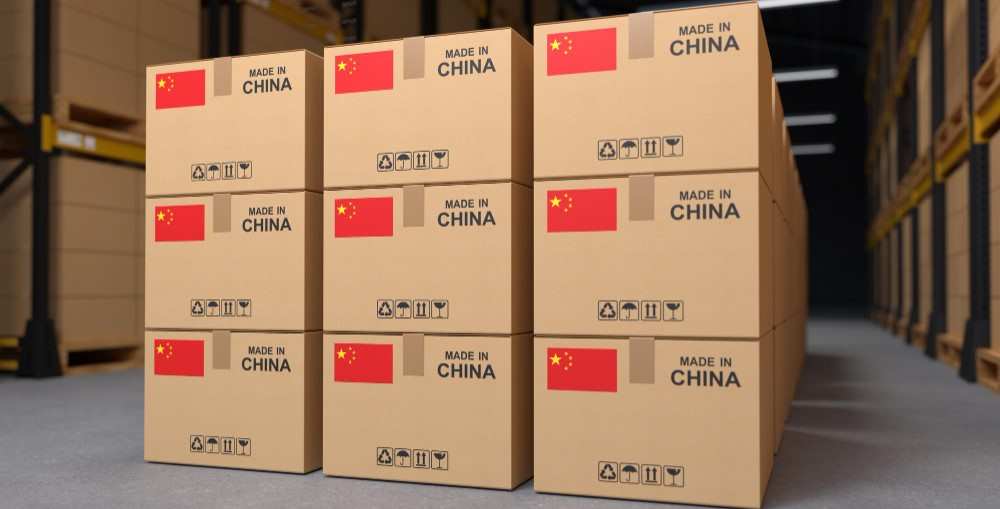
While Southeast Asia offers competitive prices for some feedstocks, it has limited capacity for certain intermediates. India continues to build capabilities, but qualification timelines and logistics can be challenging, and while the Middle East may benefit from feedstock advantages, it is often export-orientated and less flexible for smaller European buyers.
The result, according to Anjoran, is that China+1 is becoming, “China plus several smaller suppliers who all come with trade-offs”.
3. Sustainability
Chemical industry consultants increasingly view sustainability not as a branding exercise, but as a hard constraint that is fundamentally reshaping sourcing decisions. In Europe especially, regulatory pressure and downstream customer expectations are forcing buyers to demand more documentation, traceability, and transparency from raw material suppliers.
One speaker noted that sustainability is now “something procurement teams are measured on, not something marketing talks about.” This shift has real commercial consequences. The pool of suppliers able to meet stricter environmental and reporting requirements is smaller, and compliant materials often come at a premium.

The discussion also highlighted that sustainability requirements are not uniform across regions, creating additional complexity for global sourcing strategies. In this context, access to clear, structured supplier information is becoming a competitive advantage rather than a convenience.
4. Raw Material Price Shocks
Perhaps the most immediate concern raised in the discussion was the frequency and severity of raw material price shocks. Energy volatility, geopolitical events, and unplanned plant outages continue to trigger sudden movements in chemical prices, often with little warning.
As one participant remarked, price shocks are no longer “black swan events” but something buyers should expect as part of normal market behaviour. Traditional pricing models based on historical averages are proving inadequate in this environment. Companies that rely on infrequent market checks risk being caught off guard, while more agile buyers monitor pricing continuously and are ready to switch suppliers when conditions change.
Related articles: Turning Chemical Market Data into Competitive Advantage or Europe vs America: Diverging Paths for Plastics in 2026
Taken together, these four warnings point to a fundamental shift in how raw material sourcing creates competitive advantage in the chemical industry. In 2026, risk will not come only from prices moving higher but from a lack of visibility, slow reaction times, and over-reliance on assumptions that no longer hold.

As tariffs fluctuate, diversification proves more complex than expected, sustainability narrows the supplier pool, and price shocks become routine, sourcing decisions increasingly hinge on access to accurate, timely market information. Buyers that can quickly compare suppliers, understand origin risk, and monitor changing market conditions will be better positioned to protect margins and maintain supply continuity.
For manufacturers and raw material traders alike, sourcing is no longer a back-office function optimised once a year. It is a dynamic commercial capability that must be continuously managed. In this environment, transparency, optionality, and reliable market intelligence are not operational luxuries — they are essential tools for staying competitive in an increasingly unstable global market.
In this context, raw material trading platforms such as SPOTCHEMI play an increasingly important role in supporting modern sourcing strategies. By providing access to verified suppliers, comparable product information, and clearer visibility across markets, SPOTCHEMI (who support this webpage) helps buyers and traders reduce information gaps that can lead to costly decisions.
Photo credit: Freepik, DC Studio, user6702303, DC Studio, & Gencraft