Chemical Trading Reacts as Production Shifts East
As production moves to Asia, chemical suppliers must embrace global sourcing and digital platforms to stay competitive.
For chemical procurement teams and traders in Europe, the industry’s centre of gravity is shifting — and not subtly.
It is no secret that Europe is no longer the global hub of chemical production it once was. Instead, led by China, Asia has become the dominant producer and exporter of basic and specialty chemicals in a trend that is reshaping market dynamics and supply chains for years to come.
But how should buyers and suppliers of industrial chemical products be reacting to these changing economics?
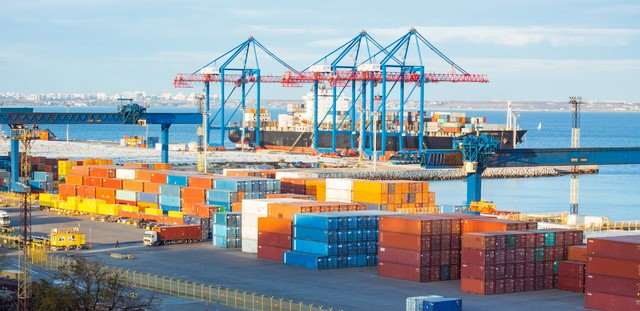
European chemical production is under intense pressure, with the latest industry reports showing the continent’s share of global chemical sales to have fallen to roughly 13%; a figure in direct contrast to China’s dominance and 46% share.
Moreover, it is a situation which is worsening for European chemical producers, with a recent report from Chemical & Engineering News (C&EN) stating that “2026 will see a painful continuation of the pressure to review traditional business models and beliefs.”
Other chemical industry analysts agree, noting how producing basic chemicals in Germany and across Europe is becoming what one expert called “increasingly unattractive.” The result is that larger chemical companies are migrating investment abroad rather than sustaining operations at home.
In response to this changing market structure, chemical producers are having to restructure how and where they operate.
Major companies have been cutting costs, repositioning businesses, and in some cases closing legacy facilities that can’t compete with newer, cheaper capacity overseas. One notable example is the Swiss chemicals group Clariant, whose CEO Conrad Keijzer has openly warned of more chemical production leaving Europe, linking it to high costs and competitive pressure from Chinese producers.
For procurement teams and chemical suppliers, this means far more fragmented trading landscapes and less certainty in long-standing local relationships, as no one knows which European businesses will survive the decade. Rather than long‑term contracts with nearby producers, buyers will increasingly need to interact in an ever more global network of chemical manufacturers and distributors.
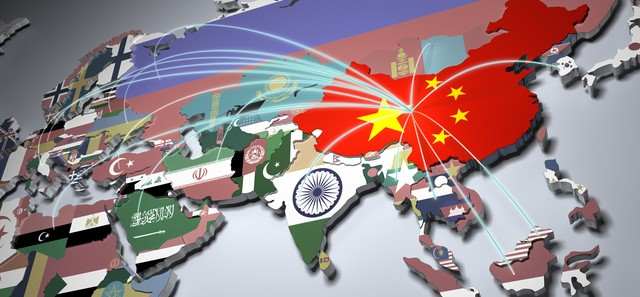
Asia as the Future Production Hub
At the same time, chemical companies themselves are placing big bets on Asia as the long‑term centre of growth.
One of the most striking examples is BASF’s recent opening of its €9 billion chemical complex in Zhanjiang, China — its largest investment ever. A senior executive there noting that this investment would help China account for around 20% of BASF’s sales by 2030 and also remain a long-term vision for the company, as it is a site intended to operate for 40–50 years.
With this in mind, the vast chemical production facility will be powered entirely by renewable energy — a detail that speaks to both cost competitiveness and environmental positioning in a chemical market where sustainability matters.
This once-in-a-generation shift reflects the broader chemical industry realities of chemical demand growing fastest in Asia. For procurement teams in the West, this means dealing with longer, more complex supply channels but also (for those who can source effectively) the potential for more price‑competitive chemicals.
What This Means for Chemical Industry Procurement and Trading
The implications for European chemical traders are profound:
· Global sourcing becomes the default: with basic capacity shrinking in Europe, buyers must rely on suppliers in Asia, the Middle East, and North America.
· Logistics and risk management become strategic differentiators: longer supply lines mean more exposure to freight volatility, tariffs, and geopolitical risk.
· More intermediaries and specialised traders gain influence: fragmentation of supply opens up arbitrage and distribution opportunities for agile players.
· Environmental credentials matter more: with production powered increasingly by renewables or low‑carbon technologies, sustainability adds commercial value.
In reaction to this, procurement professionals must become global supply chain strategists, as remaining local will no longer allow for sufficient product range or competitive price.
Conclusion: Adapt with Digital Platforms
Chemical production’s move to Asia is a structural industry transformation, not a temporary downturn.
For procurement teams and traders in Europe, the trend is now to:
· Accept the need of global chemical markets for sourcing and pricing.
· Build relationships with non‑European producers.
· Adopt new tools to navigate increased complexity in business. These include different cultures and time zones, as well as different import/export duties and safety regulations.
In this environment, digital chemical trading platforms — such as SPOTCHEMI — become vital. Online chemical industry hubs like this offer real‑time price visibility, access to a broader supplier base, and streamlined transactional workflows that help procurement teams and traders compete effectively in a global market.
In a world where chemical production and demand are disconnecting from traditional regional locations, those who adapt with data, agility, and global connectivity will capture margins even with the possibility of entering new markets. While those without sufficient information, contacts, and price analysis risk being left behind.
To find out more about how SPOTCHEMI (who sponsor this webpage) can assist in the sourcing and selling of industrial chemicals, raw materials and feedstocks, explore the platform at SPOTCHEMI or find out more by reading: How the SPOTCHEMI Platform Works or Are Online Chemical Trading Platforms Really Any Good?
For more specific information, visit us on LinkedIn to ask a question.