How the UK's Carbon Border Tax Will Impact Chemical Trade
The UK CBAM represents a significant shift in the regulatory and trading landscape for chemicals.

The UK is preparing to introduce a tax on imported goods designed to reflect the carbon costs borne by domestic producers.
Called a carbon border adjustment mechanism (CBAM), the legislation is intended to prevent “carbon leakage” and support the country’s net-zero goals. Yet the plan has sparked strong pushback from British industrial sectors, including steel, cement, and the chemical industry, which warns that the measure could disadvantage British producers, exporters, and raw material suppliers.
Scheduled for implementation in January 2027, the UK CBAM is part of a broader trend among governments to use border carbon taxes to level the playing field between domestic and foreign producers. Unlike the European Union’s version, the UK scheme currently applies sector-wide average emissions rates rather than product-specific calculations. Industry groups argue this could unfairly penalise some producers while allowing high-emission imports to escape a proportionate tax burden, potentially creating price distortions in the market.
For chemical traders and raw material procurement teams, CBAM has direct commercial implications which will influence cost structures and sourcing decisions, with some businesses needing to rethink their entire business models. Fertiliser manufacturers, for example, make a carbon-intensive product with global trade flows and so are likely to experience considerable margin pressures as imported feedstocks face new tax liabilities.
The Chemical Industries Association (CIA) and other industry bodies have called for refinements to the policy, highlighting gaps in the current design. They argue that the lack of mechanisms to protect UK exports in markets without equivalent border taxes could undermine competitiveness. Additionally, the one-year gap between the EU’s CBAM implementation and the UK’s launch may encourage a temporary surge in imports aimed at avoiding EU tariffs. This may create short-term volatility in the supply and pricing of chemical feedstocks which traders would do well to anticipate.
The CIA further highlights how the UK CBAM does not make allowances for chemical manufacturers who export to foreign markets. Instead, the Association states that, “The UK’s Modern Industrial Strategy presents an opportunity to re-evaluate our total approach to carbon pricing and leakage mitigation. A realistic and holistic approach is required to ensure a change in direction towards decarbonisation rather than a continued process of deindustrialisation.” Concluding that, “It is vital that the Government use this opportunity to put in place an effective, predictable and long-term carbon leakage mitigation regime to unlock investment in the UK, just as the EU is moving to shore up its industry.”
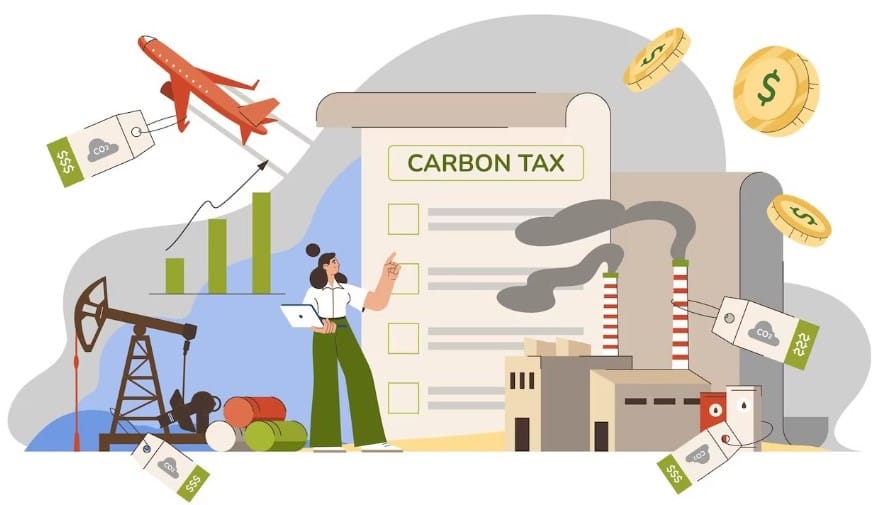
Despite these concerns, policymakers emphasise that CBAM is essential to ensure equitable carbon pricing and incentivise decarbonisation in domestic production. By embedding carbon costs into imports, the UK aims to prevent its environmental policies from being undercut by low-cost, high-emission foreign suppliers.
From a strategic perspective, this policy signals that carbon efficiency is becoming a commercial priority, and that chemical producers and traders who can navigate the new landscape will have a competitive advantage.
For many in the chemical industry, the commercial implications are clear. Companies will need to reassess supply chains to minimise CBAM exposure, prioritising low-carbon or verified decarbonised sources. Pricing models may need to be recalibrated to incorporate the carbon cost component, and contractual agreements with suppliers may require additional clauses reflecting embedded emissions. This may create new opportunities in green chemicals and low-carbon feedstocks, as buyers seek to reduce tax liabilities and strengthen sustainability credentials.

Navigating the UK CBAM will also require taking the initiative in both risk management and market intelligence. To resolve this, chemical traders should closely monitor consultation outcomes and legislative refinements, build robust carbon accounting capabilities, and maintain open communication with suppliers to ensure accurate emissions reporting. Those able to integrate carbon considerations into sourcing and pricing strategies early will not only minimise exposure but could also capitalise on first-mover advantages.
Related articles: US TSCA Reform to Reshape New Chemical Approvals or When a Weakened European Chemical Industry Met CBAM
In conclusion, the UK carbon border tax represents a significant shift in the regulatory and trading landscape for chemicals. While it introduces risks related to cost, competition, and compliance, it also offers opportunities for chemical traders who can adapt supply chains, pricing strategies, and sourcing decisions to a carbon-conscious market.
In an era where sustainability increasingly drives commercial decisions, being proactive to the UK’s carbon policy will be a defining factor for success in chemical trading in 2027 and beyond.
Photo credit: Gencraft, Janusz Walczak on Pixabay, Redgreystock on freepix, & twatchai07