From Compliance To Risk: Rethinking Chemical Regulation
In an age of AI-assisted chemical product development, does the chemical safety regulatory system need an overhaul?

For decades, chemical regulation has operated on a molecule-by-molecule basis. On paper, that sounds precise. In practice, it has created a cycle that many in the industry know too well: remove one substance, replace it with a near-identical alternative, and wait for regulation to catch up again.
For chemical traders and suppliers, this is not just a compliance issue—it is a structural inefficiency that creates hidden risk across sourcing, formulation, and long-term contracts. As pressure builds for a class-based approach, the real question is no longer scientific but commercial: can the current system keep up with how chemicals are actually bought and sold?
This is the second of two articles examining the call to overhaul governmental approach to chemical product safety by proposing a class-based regulation system which offers a different logic. Instead of evaluating substances one by one, it groups them based on shared structure, function, and hazard profile. To read more about how the classification system would operate and what the six classes are, read: Is Chemical Regulation About To Catch Up?
At the core of the belief for change is the notion that ‘regrettable substitution’ (or ‘the toxic treadmill’, as it is also known) doesn’t just lag behind science—it clashes with how chemicals are actually traded.
For example, when bisphenol A (BPA), a synthetic component used to create plastic, was shown to interact with the human endocrine system, many chemical companies and manufacturers began removing it from their products. But many soon began substituting the removed toxin with bisphenol S (BPS), a similar group of compounds that has also been connected to endocrine and oestrogen disturbance.

“As a consumer we think, these people are taking care of me, they say it’s BPA-free,” says Anna Reade, a director at the international non-profit Natural Resources Defense Council (NRDC). “And then at the end of the day, it has BPS, a very similar chemical that’s going to potentially expose me to hormone-disrupting chemicals as well.”
At its simplest, the approach requires a different view on chemical product assessment prior to approval, asking: Is the chemical necessary? Is the function worth the risk? Are there safer alternatives?
As a report in the Good Men Project explains, “Some chemicals within these six classes serve critical functions, such as personal protective equipment, so should be limited in their use rather than banned. Others, like antimicrobials added to household hand soap (shown to be no more effective than plain soap), have no justification for widespread use based on this type of analysis.”

Most significantly behind the growing support for the six classes movement are the chemical companies and traders who see the one-by-one model as a commercial risk. While most regulatory frameworks assess individual substances, chemical products are frequently sold as mixtures. This means that a chemical product might be sourced as something fully compliant on paper yet may carry exposure that regulation will catch up on years later.
Even beyond the question of business, no one wants to trade chemical products that hurt or kill innocent people.
Winners And Losers In A Class-Based Market
Of course, any change to the rules on chemical production and supply won’t affect everyone equally, with some parts of the chemical market naturally better positioned than others. For example, suppliers offering genuinely safer alternatives will be clearly set to gain. As will chemical distributors with strong transparency and chemical trading platforms that enable comparison across chemical families.
Meanwhile, chemical producers who rely on minor molecular tweaks and traders operating with limited visibility beyond CAS numbers may find the proposed chemical regulation overhaul catastrophic to their business models.

Evidence of the resistance to these changes can be seen in the way some chemical producers and their lobbyists have reacted to restrictions on PFAS production and use.
And if regulation does move to class-level thinking, then industrial chemical sourcing and supply has to change thinking too.
What This Means For Chemical Market and Traders
Instead of the familiar CAS-number approach, chemical suppliers would need to gain an understanding of functional substitutes, exposure risks across categories, and how entire groups of chemicals might be treated in future regulation.
Chemical product compliance would shift upstream, away from manufacturers and onto chemical producers and suppliers.
In a class-based world, chemical traders would need faster ways to identify alternatives, compare suppliers across categories, and understand what sits behind a product—not just its label. The value would no longer be in access to chemicals alone but in clarity over what is on sale.
This is where digital platforms would be able to fill the information gap with convenience. Chemical trading sites, such as SPOTCHEMI, already enable more informed decisions on costs, contracts, and commitments before the issue of chemical safety classification even starts to stack up.
While the introduction of a class-based system would provide some clarity over chemical safety regulation and product development, in the transitional phase there would be some confusion over classification. By accessing chemical trading hubs, chemical suppliers and buyers would be able to see the market more clearly and make better informed decisions.
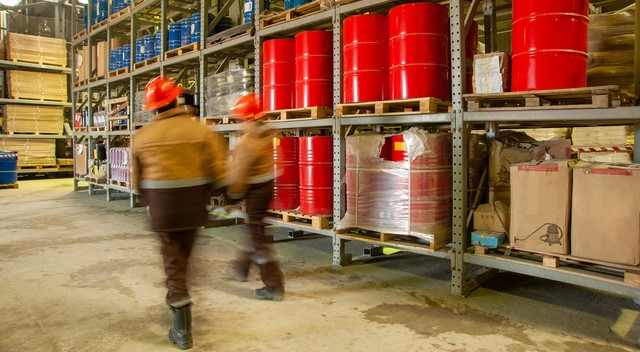
In many regions, most notably in Europe, chemical regulation is already moving from reactive to preventive. And while the move to a class-based system will not happen overnight, chemical traders will need to be prepared for an era of more stable sourcing, fewer costly surprises, and a clearer view of where risk actually sits.
In a world on the verge of an AI revolution in chemical product research, there is no way that legislation will be able to keep pace with invention.
If you would like to know more about how a digital trading platform for industrial chemicals could help your business, then read: How the SPOTCHEMI Platform Works or visit SPOTCHEMI (who sponsor this webpage) and see for yourself.
Photo credit: Vecteezy, Vecteezy, Vecteezy, & Vecteezy, Vecteezy