How to Gain Chemical Product Value with Logistics
Discover how logistics has become a key part of how a chemical product’s price is created—or lost.
Chemical logistics used to be about optimisation—fill rates, cost per tonne, and keeping things moving smoothly in the background for ‘just-in-time’ delivery. But that version of the chemical industry has now gone, as geopolitical disruption, demand swings, tightening regulation, and uneven visibility across supply chains have placed logistics right in the middle of the current market volatility.
In a recent interview with Chemical Industry Journal, Markus Kanis, Global SVP – Chemicals at DP World, highlighted a simple but important reality: chemical product logistics is no longer operating in a stable, efficiency-led environment. Instead, it is being reshaped by volatility.
Drawing on these insights, this article outlines five of the most pressing logistics challenges currently shaping chemical trade and why they are increasingly central to chemical company performance rather than just about moving a chemical product from A to B at the lowest cost.
1. Structural Cost Pressure In Europe
According to Kanis, Europe remains structurally expensive to operate in, with higher energy costs, heavier compliance burdens, and less flexible labour than competing regions. For European chemical traders and producers, this feeds directly into logistics decisions, as transportation costs can become the deciding factor in whether a trade exists at all.
In response to this, chemical companies are taking steps to improve and secure their logistics systems. A recent DP World survey found that, “51% of global supply chain executives plan to diversify suppliers and 44% plan to raise inventories [and] around 61% of respondents listed warehousing and logistics hubs among their top investment needs.”
Europe is still trading chemicals but is having to make changes to do so efficiently enough to stay profitable.
2. Regulatory Pressure Is Constant, Not Cyclical
Regulation used to arrive in waves, as laws were passed or court decisions made, but now the change seems continuous.
From dangerous goods compliance to environmental reporting and customs tightening, every part of the logistics chain is under more scrutiny than before. And with each amendment comes the friction of documentation delays, inspection variability, and cross-border inconsistencies, all adding latency to trades that used to move quickly.
As Kanis notes, “... regulatory and operational complexity is on the rise. Stricter Dangerous Goods and Safety, Quality and Sustainability (SQAS) rules demand more paperwork and specialised assets – at a time when customs clearance now accounts for the single largest share of logistics delays.”
This means that compliance is no longer a back-office function but has become a bottleneck which is directly influencing price and availability.
3. Demand Volatility And Unstable Shipment Cycles
Kanis also believes that the biggest challenge right now isn’t a lack of demand—it’s inconsistency.
One week inventories are overstocked after panic buying, then in the following week, demand disappears as downstream buyers step back. This creates uneven shipping patterns, where logistics providers are forced to respond to spikes and gaps rather than steady flows.
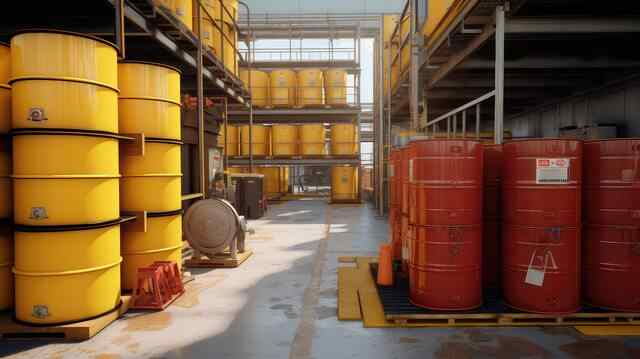
For chemical markets, this distorts planning completely and creates further price surges and falls as vessels, tank capacity, and trucking networks are no longer scheduled against predictable cycles.
The result is that chemical companies and suppliers must try to survive (or make gains) in a stop-start system.
4. Geopolitical Fragmentation Of Trade Routes
Globalisation is no longer a single direction of travel but is splitting into regional corridors, each with its own constraints.
Sanctions, tariffs, and shifting alliances have made traditional optimised routes less reliable. Cargoes that once moved freely are now subject to rerouting, longer lead times, and alternative sourcing decisions that prioritise security over efficiency.
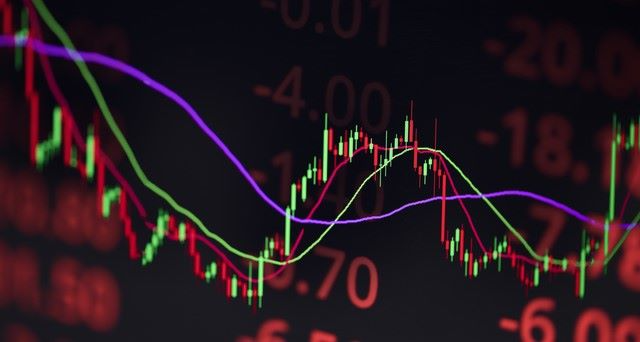
For traders, this matters because logistics is now part of geopolitical risk pricing. A product’s value is no longer just a chemical in need—its value is in the route it takes, its compliance burden, and timing risk all at once.
5. Fragmented Visibility Across The Chain
Despite all the technology in the market, visibility is still uneven, with most chemical supply chains relying on disconnected systems. In practical terms, it is common for a chemical company to have one system for shipping, another for warehousing, and another for trading, with none of them fully aligned in real time. The result is delayed reaction to problems that are already unfolding.
When a shipment is late or a port congests, the market often finds out after the price has already moved.
This gap between physical reality and market awareness is now one of the biggest inefficiencies in chemical industry logistics—and one of the biggest opportunities for those who can close it.
In response, the most successful chemical companies are trying to unify their logistics systems. As Kunis observes, “... fundamentally, we are seeing a shift away from fragmented supply chain models towards integrated, end-to-end networks that provide greater control, consistency and visibility.”
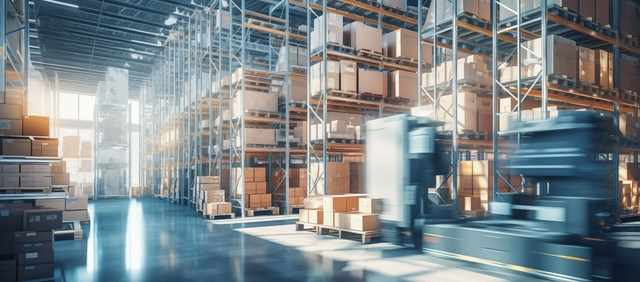
All five of these challenges point to the same shift: logistics is no longer separate from trading logic, with cost, timing, and route stability now directly shaping chemical product pricing. As the market continues to move from linear supply chains to adaptive networks, information speed has become just as important as physical movement.
As Kunis concludes, “Looking forward, I believe the opportunities lie in building truly integrated, data‑driven networks. From real-time digital visibility and predictive alerts to AI and automation, new enablers of resilience are being implemented throughout the sector’s supply chains.”
That’s why chemical trading platforms and digital ecosystems like Spotchemi are becoming more relevant. Not because they “digitise logistics”, but because they reduce the gap between what is happening in the market and what traders and raw material suppliers can actually see and act on.
Because in today’s chemical industry market, logistics isn’t behind the trade; it is part of the trade.
To find out more about how SPOTCHEMI (who sponsor this webpage) can assist in the sourcing and selling of industrial chemicals, raw materials and feedstocks, explore the platform at SPOTCHEMI or find out more by reading: How the SPOTCHEMI Platform Works or Are Online Chemical Trading Platforms Really Any Good?
Photo credit: Vecteezy, Vecteezy, Vecteezy, Vecteezy & Vecteezy.