The New Reality for Specialty Chemical Markets
Weak demand and rising costs are reshaping the specialty chemicals sector, but the market is showing adaptability rather than sharp decline.

At first glance, cautious customers, shifting supply chains, and constant geopolitical noise may make the specialty chemicals sector appear to be in decline. The truth is more nuanced and shows a sector experiencing neither dramatic growth nor collapse. Instead, specialty chemical producers are operating in a narrow band of stability shaped by discipline, cost control, and supply chain adjustment.
A recent industry overview published by CHEManager describes the current environment as one where companies are “navigating shifting markets, policy uncertainty, and evolving global supply chains while continuing to invest in innovation, operational strength, and long-term partnerships.”
This is not a description of expansion, but of the flexibility required under pressure. This is common practice, as Jenn Klein, President & CEO of SOCMA, notes, “The specialty chemical industry has long been defined by resilience and adaptability.”
Demand Signals: Stable, But Not Strong
Across the wider chemicals industry, the growth picture remains muted. McKinsey, for example, notes that the sector is operating under a “modest demand outlook” combined with structural pressures in key value chains.
On paper, performance across the specialty chemicals sector has held up, but the reality is more about stability under strain than genuine growth. For example, BASF entered 2026 guiding full-year EBITDA before special items of €6.2–€7.0 billion, broadly in line with 2025 levels (€6.6 billion), signalling a sector that is holding rather than accelerating. Even with weak January demand and currency headwinds, the company’s outlook points to “slight changes rather than structural decline”, with earnings expected to remain within a tight band rather than deteriorate sharply.
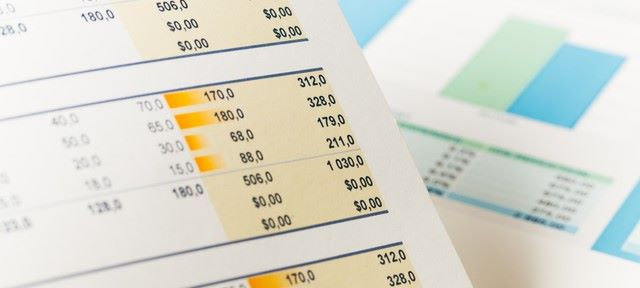
At the same time, early 2026 market commentary shows a similar pattern across Europe: chemical producers are facing weaker Q1 earnings due to high energy costs and subdued demand, yet most are responding by pushing price increases to defend margins rather than seeing volume collapse. In fact, BASF itself has introduced price increases of up to 30% in selected product lines to offset raw material and logistics inflation, again highlighting a sector focused on preservation rather than contraction.
Broader industry analysis also supports this picture of equilibrium under pressure. While demand in many end-use sectors remains flat, global chemical output is still expected to grow modestly, with specialty chemicals broadly described as “essentially flat” in 2026 as end-use markets struggle to gain momentum.
Related articles: From Panic To Pushback: A Chemical Spot Price Tale or How Involution is Impacting Industrial Chemical Markets
A recent McKinsey report also notes that the chemical industry has experienced weaker earnings momentum in recent years, with returns lagging broader markets as margin pressure persists. As a result, companies are focusing more on cost control, portfolio optimisation, and selective investment to maintain performance rather than expand it.
In other words, demand is not collapsing, but it is not strong enough to drive broad-based growth either. This aligns with CHEManager’s observation that “change has become constant” for specialty chemical companies, requiring continuous operational adjustment rather than expansion-led strategies.
Supply Chains: The Shift Toward Resilience
If demand is defining the limits of growth, supply chains are defining how companies survive within those limits.
One of the clearest structural changes highlighted is the role of supply chains, with an emphasis that “trust, reliability, and long-term partnerships” are becoming central as chemical companies respond to volatility and disruption across global logistics networks.
This is a view reinforced by Deloitte, which reports that chemical companies are actively building operational stability by “managing risks, building in flexibility, and enhancing resilience” in response to ongoing geopolitical and trade uncertainty. It means creating supply chains that are no longer designed purely for efficiency but for continuity under stress.
This is largely because of the fragmentation in chemical industry supply chains which has made relationships more important and technical knowledge more valuable than ever.
Industrial chemical suppliers who rely purely on price will not fare as well as in previous times. Instead, those who can navigate the complexity (across regions, products, and partnerships) will find better opportunities.
As Klein concludes, “In an era where change has become the new normal, the characteristics [of resilience, reliability, and innovation] are proving more valuable than ever.”