The Permanent Crisis Facing Europe’s Chemical Industry
How energy shocks and geopolitics will destroy European chemical production.
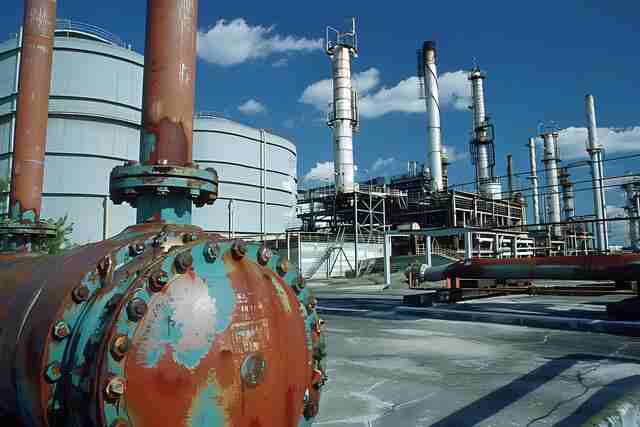
Germany’s chemical industry entered 2026 hoping the worst of the energy crisis was finally over. After years of disruption caused by the loss of Russian gas, chemical manufacturers expected lower energy prices, greater stability, and the beginning of an industrial recovery.
Instead, the conflict in the Persian Gulf has reopened many of the same vulnerabilities which had already pushed Europe’s chemical sector into crisis.
“Energy prices, especially natural gas prices, have doubled since the war in Ukraine started,” explained Christof Günther, managing director of InfraLeuna, the operator behind Germany’s largest integrated chemical complex, Leuna Chemical Park. “And they have just doubled again temporarily due to the war in Iran. So, we are dealing with extremely high energy costs.”
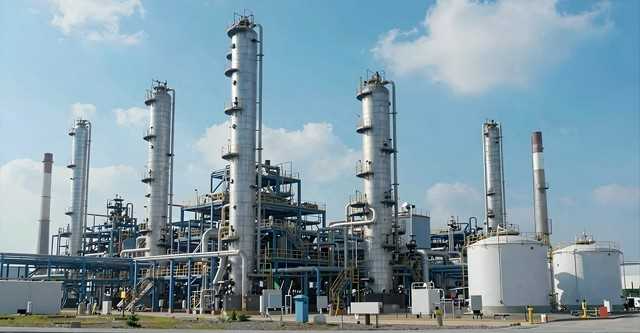
For many producers, this no longer looks like a temporary downturn but a structural decline in European industrial competitiveness. Consequently, a recent survey published by the Ifo Institute found that business morale in Germany’s chemical industry fell in April to its lowest level in almost three years.
The scale of the pressure is becoming difficult to ignore, with the Financial Times recently reporting that plant closures across Europe have increased sixfold over the past four years. Nearly 10% of European chemical production capacity has already disappeared.
According to a recent Cefic survey, major producers including BASF, INEOS, Covestro, Lanxess, and Evonik are operating many facilities at only 62–68% of capacity, even though heavy chemical manufacturing generally requires around 80% utilisation simply to remain economically viable.
Germany has been hit particularly hard because chemicals sit at the centre of the country’s wider industrial system, where chemical production supports automotive manufacturing, pharmaceuticals, packaging, construction materials, agriculture, coatings, and advanced engineering supply chains.
“Overall revenue generated by German chemical firms has dropped by around 22% since 2022, to €220 billion in 2025,” stated the German chemical industry association VCI.
The Persian Gulf conflict has intensified these problems because it directly affects feedstocks essential to European petrochemicals. Since the Iran conflict began, European naphtha prices have reportedly surged by 64%.
That matters enormously for European manufacturing, as naphtha is the primary feedstock used in European steam crackers to produce ethylene and propylene, the molecular building blocks for polyethylene, polypropylene, and many industrial plastics.
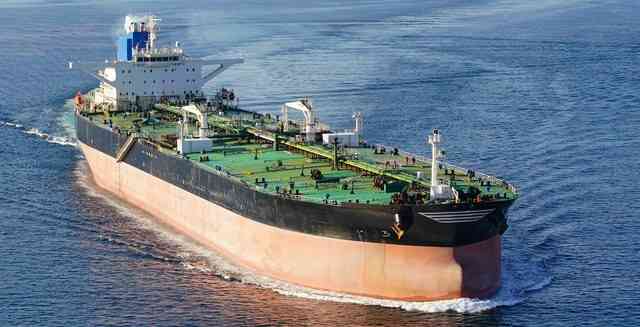
As feedstock costs rise, European polymer producers are struggling to transfer those increases through the supply chain quickly enough to protect margins. It also shows how exposed Europe’s chemical industry remains to global energy and shipping disruptions.
Nick Staunton, editor in chief at European Business Magazine, described the consequences starkly: “Iran breaks naphtha. Naphtha breaks chemicals. Chemicals break manufacturing. Manufacturing breaks employment. Employment breaks politics.”
The cost disadvantage against the United States has also become increasingly severe.
“The rule of thumb in the petrochemical industry is that if the ratio of international oil prices to US natural gas prices exceeds 10, US firms have a cost advantage,” explained CE&N’s Alexander Tullo. “Even before the war, that ratio stood at about 24. With the spike in oil prices that the war has brought, it has swelled to nearly 41.”
That gap is becoming commercially devastating for European commodity chemicals.
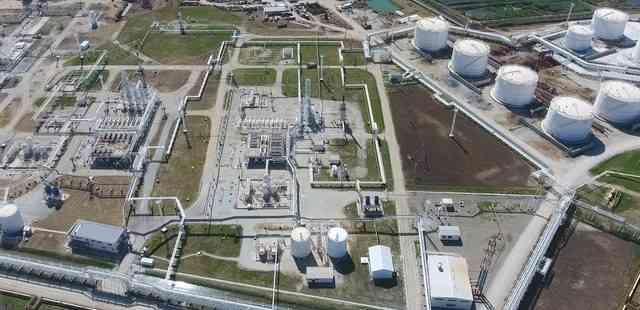
An analysis published by European Business Magazine argued that Europe’s 2026 cost base is becoming fundamentally unsustainable because energy prices remain structurally higher than in the US, while Chinese overcapacity continues placing downward pressure on global commodity pricing.
But the price pressure is not from North America alone, as European chemical manufacturers are dealing with increasing competition from imported materials redirected from Asia. The Financial Times reporting that Chinese chemical producers have been increasing exports into Europe following changing US trade conditions. As a result, many European chemical companies are abandoning the idea that they can compete primarily on price.
For decades, global procurement focused almost entirely on efficiency and low cost. That model is now breaking down under geopolitical pressure.
Related articles: The New Reality for Specialty Chemical Markets and How to Gain Chemical Product Value with Logistics
This is becoming one of the defining industrial questions facing Europe—how to stay feedstock competitive and independent. As the Christian Science Monitor observed, “Germany was supposed to have learned how to protect itself from energy shocks after the Ukraine war. But the Iran war has shown that gaps still exist.”
The deeper problem is that geopolitical instability no longer appears temporary, with energy prices, shipping disruptions, sanctions, industrial policy, and regional conflicts now influencing chemical markets almost as much as normal supply-and-demand fundamentals.
With such volatility becoming a permanent feature of the market rather than a short-term disruption, what are European chemical producers and suppliers to do?