The World's Most Ambitious Wood-To-Chemicals Facility
A new German chemicals facility represents one of the biggest attempts yet to replace fossil carbon with biomass on a truly industrial scale.
For decades, Europe's chemical industry has relied on one fundamental assumption: most chemical feedstocks would come from fossil fuels.
Whether sourced directly from oil, coal, or gas produced within Europe or imported from overseas, petrochemical feedstocks have formed the foundation of everything from plastics and coatings to solvents and specialty chemicals. The entire industry has been built around their availability.
Today, that assumption is being questioned as geopolitical uncertainty, energy market volatility, and pressure to reduce carbon emissions are forcing chemical producers to consider alternatives. Among the most ambitious of these alternatives is a simple idea that would have sounded unrealistic only a few years ago: making industrial chemicals from wood at an industrial scale.
A major test of this concept is now underway in Leuna, Germany, where forestry giant UPM has invested heavily in large-scale biorefining technology capable of converting wood into renewable chemical feedstocks. The project represents one of the biggest attempts yet to replace fossil carbon with biomass for industry.
The implications extend far beyond one chemical company or supplier, as if successful, it could help reshape how Europe sources much of the raw materials that underpin its chemical industry.
The question is whether it can deliver on its promise.
Will this Wood-to-Chemicals Project Set Europe Fossil Feedstock Free?
The scale of UPM's investment helps explain why the project is attracting so much attention across the chemical industry, as the biorefinery is unlike anything previously attempted.
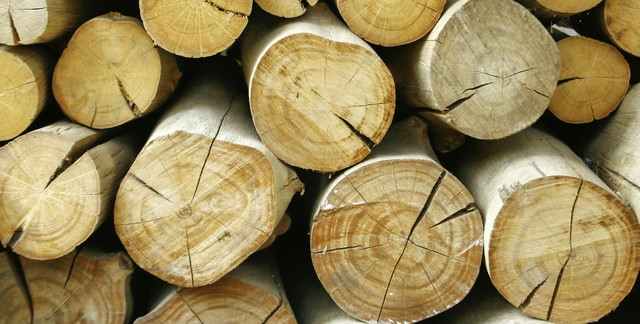
Even more staggering than the roughly $1.6 billion build cost is the scale of the logistics, as the plant contains around 1,000 kilometres of cable, 180 kilometres of pipework, and 40,000 valves. All working to process 220,000 tonnes of sustainably sourced European beech wood every year from forests located within a 200-kilometre radius of the site.
Once the plant reaches full operating capacity, which UPM expects in 2027, multiple trains and as many as 20 truck deliveries per day will transport beech trunks to the facility, creating a supply chain that resembles a major petrochemical complex more than a traditional forestry operation.
But more than just for its size, what makes the project particularly significant is that the facility will not be producing low-value biofuels but functional fillers, glycols, and industrial sugars that can serve as feedstocks for a wide range of chemical products. In effect, UPM is attempting to create a renewable carbon platform capable of supplying many of the same industrial markets currently served by fossil-derived raw materials.
To do so needs cutting-edge chemistry and a process where the beech tree trunks are dropped onto a massive conveyor for transportation to a pretreatment facility. They are then stripped of their bark, chopped into chips, and kept in two enormous hoppers. The chips next travel on another conveyor to an enzymatic hydrolysis machine, where steam is used to break the wood into its constituent parts: cellulose (50%), hemicellulose (25%), and lignin (25%).
UPM then employs a number of technologies, one of which is the process of turning cellulose and hemicellulose into industrial sugars. Some of the sugars are catalytically converted into propylene and ethylene glycol, but the company will also employ a range of methods to improve lignin's functional qualities for industrial use.
“I’m very curious about the technology they’re running, because I think they found something new,” says Marco Mensink, director general of Cefic, Europe’s chemical industry association. “The scale makes this a very, very serious jump into the chemical industry.”
Harald Dialer, UPM’s chief technology officer, agrees but is confident that the process will work. “It’s not an experiment. It was clear when I accepted this job that there would be an uphill battle, but I think we solved it.”
There is, though, a bigger underlying problem: biobased chemicals have always been more expensive than their fossil fuel counterparts. “There is a higher cost,” notes Dialer. “There’s no cost parity at the moment, but we are able to command a ‘biopremium’ in the market.”
UPM’s market for its eco-friendly chemical products includes vehicle tyres and polyethylene terephthalate (PET) bottles. Bernd Elser, a consultant at Accenture who specialises in chemicals and natural resources, agrees that there is a market for wood-based chemical feedstocks, explaining that, “It could be [used] in fashion products, textiles, or packaging for dairy products.”
“We have gained a lot of interest for the products at scale,” Dialer adds. Although how much of a green premium customers are prepared to pay is an industrial secret. “Overall profitability is in the target range,” he concludes. “Of course we are profitable.”
Related articles: Europe’s Chemical Industry is Being Forced Towards Opportunity or The Permanent Crisis Facing Europe’s Chemical Industry
The maths provide adequate support for the project’s green credentials, as to make 1 t of PET typically has a carbon footprint of 1.5–2.2 t for mechanically recycled PET, 1.6–2.6 t for chemically recycled PET, and 3.0–3.4 t for PET made from ethylene glycol derived from fossil fuels. In contrast, UPM's customers will only have an 800 kg carbon footprint using its wood-to-chemicals ethylene glycol.
Perhaps more significantly for many chemical suppliers is the certainty of an EU-based supply chain that avoids disruptions from Russian sanctions, conflict in Iran, or the next unexpected supply chain shock. In that sense, having chemical feedstocks close to home (with reduced transport costs and carbon miles) also makes good sense.
“We’ve now got a very strong national-security angle in all of this that people have finally realized,” says Paul Hodges, a petrochemical industry consultant.
The chemical industry's history is littered with ambitious bio-based projects that failed to achieve commercial success, as the gap between technical feasibility and commercial viability has proven difficult for many companies to bridge. In 2023, for example, Clariant abandoned its business producing ethanol from agricultural straw after recording losses exceeding $200 million.
UPM therefore faces a daunting challenge in getting customers to commit to wood-derived alternative feedstocks. The technology must also operate reliably at full industrial scale, and (most importantly) the economics must remain reasonably competitive against conventional petrochemical routes.
Overall, it is tempting to view wood-based chemicals primarily as an environmental initiative, but in reality, the stakes are much higher.
If industrial biorefineries succeed, Europe could gain a new domestic source of chemical carbon at a time when feedstock security is becoming increasingly important. Manufacturers would become less dependent on imported fossil resources, while forestry sectors could move further up the value chain by producing chemical products.
If the project fails, however, Europe’s chemical industry will continue to be heavily dependent on external feedstocks competing against competitors with access to cheaper hydrocarbons.
Wood is one of the few renewable carbon resources available in significant quantities within Europe, with extensive forestry resources supported by mature harvesting, transportation, and processing infrastructure. And unlike many proposed renewable feedstocks (such as cooking oil), wood is already collected, transported, and processed on a massive industrial scale. So, the challenge is no longer obtaining the raw material. The challenge is converting it into chemicals competitively.
This means that what is happening in Germany today is effectively a large-scale test of whether renewables can compete in the real world of industrial chemistry. The results will determine how Europe's chemical industry sources its feedstocks for decades to come.
Photo credit: Vecteezy, Vecteezy, Vecteezy, Vecteezy, Vecteezy, & Gencraft